Use case · NFT collection
The NFT project shutting down
Five thousand holders, an immutable smart contract, two hundred gigabytes of high-resolution images, a site telling the story of the project. The team is stopping. The token will keep existing on the chain — but without an archive of the off-chain assets, it becomes an empty shell. That is what Archivum takes over.
The setting
You launched an NFT collection three to five years ago. Five thousand tokens minted on a public chain (Ethereum, Polygon, Tezos depending on the original choice), a strong visual identity, a documented lore on a website, a team of artists and developers, an active community on Discord and Twitter. The publishing entity — usually a SAS or an LLC — ran for three seasons, then the economic model ran out of steam. You decide to stop.
On the chain, nothing changes. The smart contract keeps existing, the tokens stay in their holders' wallets, the secondary market may keep trading them. That part requires no intervention — it was designed to outlive any particular operator, that is the architectural promise of a public chain.
Off-chain, however, almost everything is fragile. The image each holder sees in their wallet is not in the smart contract: it is referenced by a URL or IPFS hash that points to a file hosted somewhere. That “somewhere” is usually a paid pinning service (Pinata, NFT.Storage, a private node), or a regular web server. When the entity closes, nobody pays the subscription anymore. A few months later, the hash no longer resolves. The image disappears. The NFT becomes an orphaned identifier.
The chain survives. Off-chain assets follow the fate of the publishing entity. Without archiving, the token outlives its meaning.
- 5,000tokens minted
- ~200 GBof off-chain assets
- 3 to 5 yearsof activity
- 2 mailboxessupport to take over
What is at stake
- The metadata files. One JSON file per token, defining the title, description, attributes (rarity, traits, levels) and the URL or hash of the associated image. The metadata is the spine of the user experience — without it, the wallet has nothing to show beyond the token number.
- High-resolution images and media.PNG, GIF, MP4 files, sometimes in several variants (thumbnail, web, high resolution, print masters). Often represent the bulk of the volume to preserve.
- IPFS pinning. If your metadata references an IPFS hash, that hash only resolves as long as at least one node on the network "pins" the content. When the team stops paying for the pinning service, the network eventually forgets the content — unless another operator has taken over. That handover is precisely what we provide.
- The editorial site. The lore, the historical roadmap, the artists' bios, press mentions, smart-contract documentation — context that gives the collection meaning, and that no blockchain explorer provides natively.
- Support mailboxes.
contact@,support@,holders@still receive messages for years — holders struggling with a transfer, journalists looking for context, lawyers with a question about rights assignment. Seeemail continuity. - Rights assignment over the underlying artwork. The smart contract defines token ownership, not necessarily copyright assignment over the image. Depending on the original licence, the artwork may remain subject to French intellectual property law (L. 131-3) or to specific clauses (CC0, BAYC-style, etc.) — a framework conservation must respect.
What Archivum does not archive
Three elements deliberately fall outside the scope:
- The smart contract itself. It lives on the chain, its existence is not an archiving problem — the architecture of the public chain takes care of that. We document its address, its compiled version and its ABI in the register, for reference, without “reproducing” it.
- Holders' wallets. Those are their private keys, beyond any third-party scope. Archivum has no access and never will.
- Discord, Twitter, decentralised communities. Those conversations live on third-party platforms whose preservation depends on their owners. We can archive structured HTML captures if historical value warrants it, but it is not our core service.
How Archivum operates
- 1
Scoping the case
Technical inventory: smart-contract address, chain(s) involved, metadata schema, media volume, current pinning services or hosts. Identification of successors (founding team, artists, sometimes representatives of a holders' cooperative) and of the applicable voting rule. Detailed quote.
- 2
Off-chain asset retrieval
Structured download of all metadata and all media referenced by the collection. Verification that each announced IPFS hash matches the retrieved content (integrity). Indexing per token (number, attributes, contributor).
- 3
Relay-pinning setup
Metadata and media are stored onsovereign French infrastructure (Scaleway) and published via a European IPFS node. The original IPFS hash keeps resolving. For projects whose metadata points over HTTP, a stable redirection is set up from the original domain to the Archivum mirror.
- 4
Editorial site migration
The site that tells the project is regenerated as static HTML (lore, roadmap, team, press mentions, technical FAQ). Seestatic-mode site migration. Domain preservation — essential, since metadata may reference it.
- 5
Support email takeover
contact@,support@and the legal mailbox are taken over ininbound-only mode. Holders, journalists or lawyers can keep writing in; granted successors read and reply from their own address. - 6
Conservation and end-of-period arbitration
The contract sets a retention duration — typically long for this kind of case (10 years or more). The named successors decide at term between extension, deletion of the off-chain mirror or transfer to a third party. Seeend-of-period arbitration.
Ten years on
The successors named in the contract — former founders, representatives of a holders' cooperative, or a designated agent — decide collegially.
Extension
A new period. Often chosen because the value expected by holders is precisely long-term persistence.
Mirror deletion
The pinning and the site are stopped. The chain remains intact, but the referenced content becomes unreachable. A rare choice, generally taken only if a legal reason requires it.
Transfer to the trustee
Archivum inherits contractually the domain, pinning and editorial site — or transfers them to a holders' cooperative or a foundation designated in advance by the successors.
How much it costs
For a typical collection — 5,000 tokens, ~200 GB of off-chain assets, editorial site, two support mailboxes — over ten years, the order of magnitude isa few thousand euros per year. Media weight (especially video and high-resolution images) and active IPFS pinning maintenance drive more cost than token count. For generative collections (tens of thousands of tokens but small per-item volume), pricing is tighter. The quote is set at scoping.
They trusted us
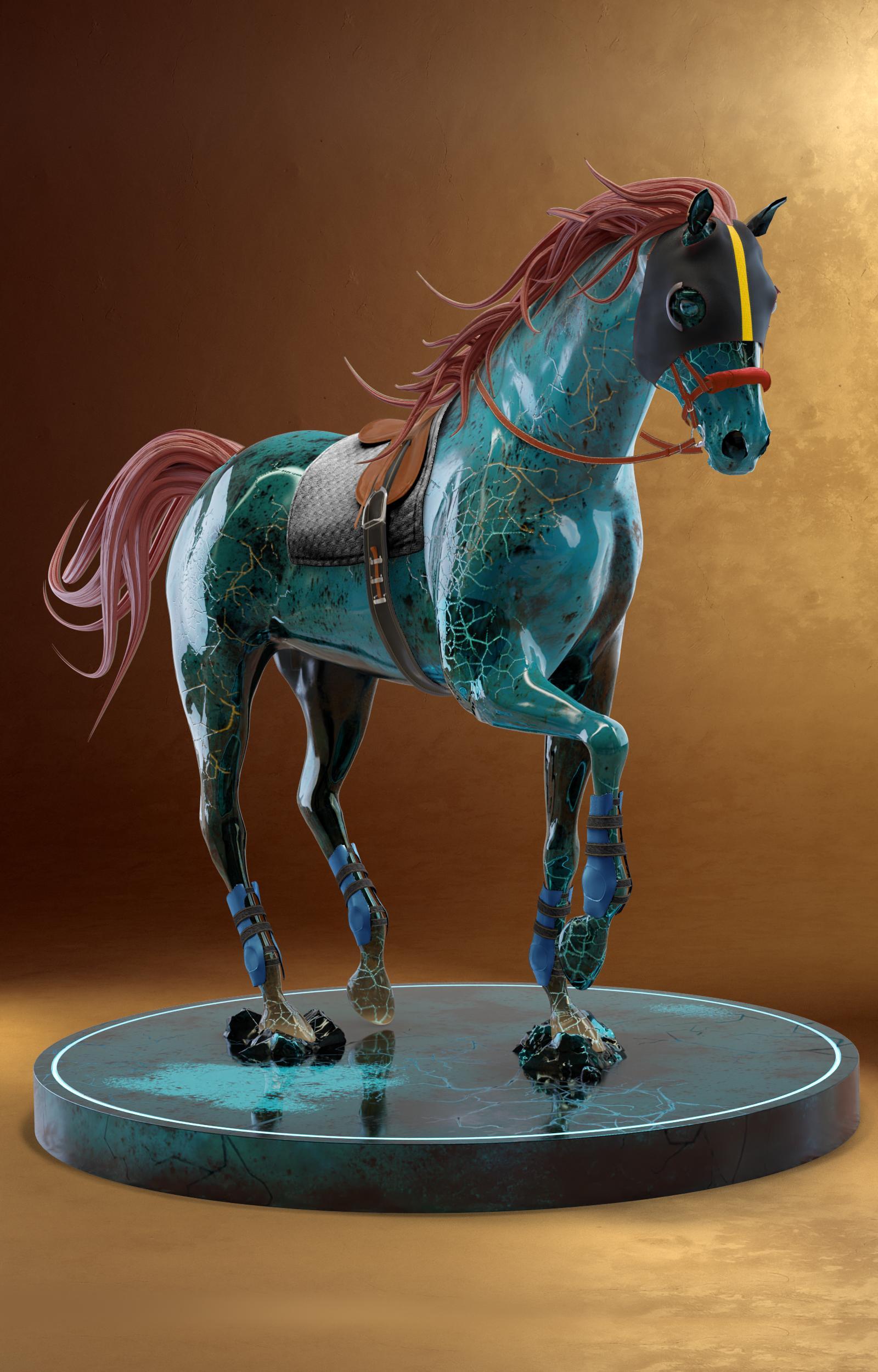
For Playstables, a fantasy horse-racing game built on the Tezos blockchain and an NFT economy, Archivum took over the long-term preservation of the off-chain assets (artwork of the 6,666 generated horses, metadata) and the conservation of theStables collection on objkt, so that the community keeps access to its tokens beyond the project's active life.
“We have been working withDavidand his team for more than a year, and I couldn't be happier with it. Professional, fast, effective — and, as a bonus, genuinely pleasant people to work with.”
Scope your case
Initial scoping verifies the perimeter of off-chain assets (metadata, media, site, email), confirms the chain and contract involved, and proposes two or three priced scenarios. It is also where we discuss the choice between long-term Archivum conservation and transfer to a holders' cooperative.